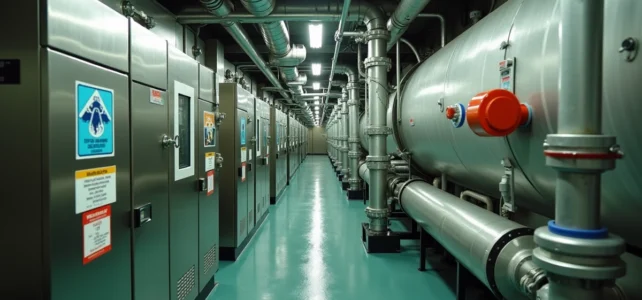
On a cruise ship, several thousand passengers and crew members live, eat, and wash every day. This daily life produces a considerable volume of wastewater and solid waste. The treatment of these discharges relies on onboard facilities that function like true floating mini wastewater treatment plants, governed by strict international regulations.
Black water, gray water: two distinct circuits on board the ship
You may have noticed that in a house, the water from the toilets and that from the shower do not pose the same sanitary issues? The same principle applies on a cruise ship, but with much stronger constraints.
Black water refers to the discharges from toilets. It contains fecal matter and pathogens. Onboard, it is collected in dedicated retention tanks, then directed to a biological and chemical treatment system before any potential discharge.
Gray water comes from showers, sinks, kitchens, and laundries. Less loaded with pathogens, it represents a much larger volume than black water. On newer ships, it follows a separate circuit but also goes through a filtration and disinfection stage. As detailed by the Euro Voyages website, the distinction between these two types of water conditions the entire logic of onboard treatment.
On older cruise ships, gray water was sometimes discharged directly into the sea, without prior treatment. This practice is tending to disappear due to new port requirements and environmental standards.
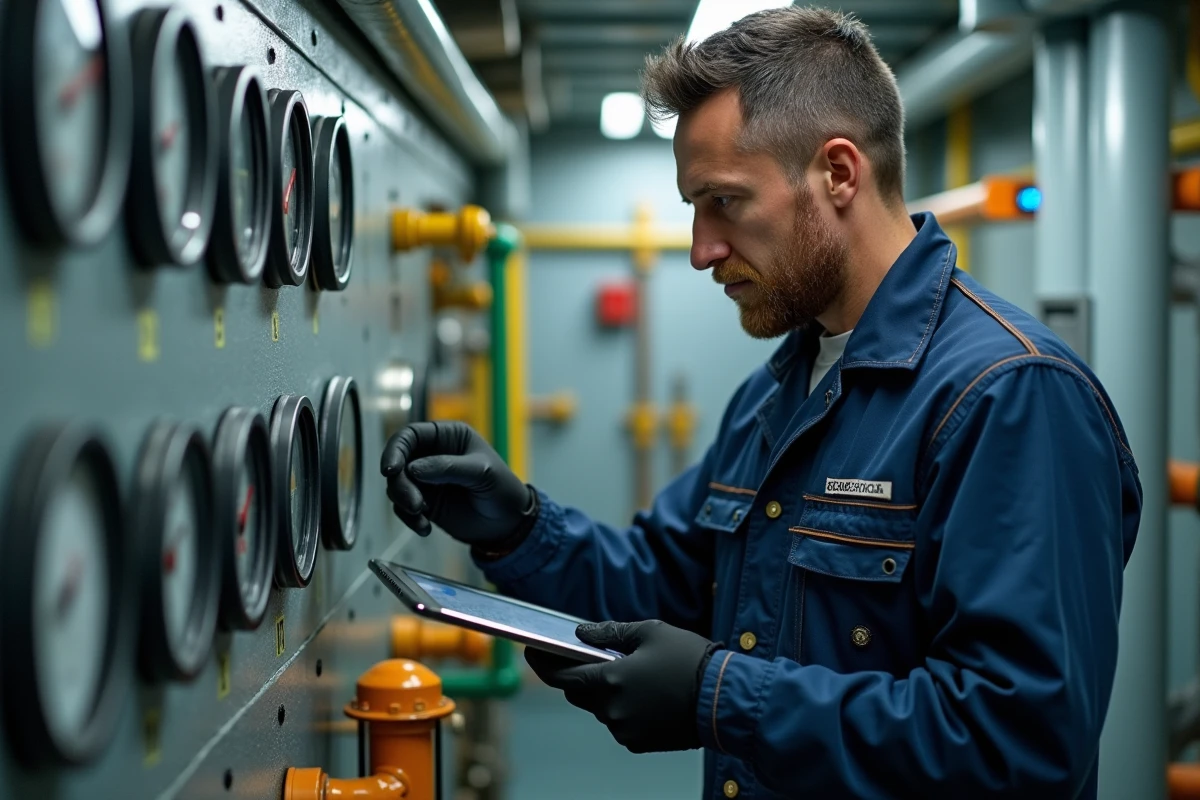
Onboard treatment plants: wastewater treatment on a cruise
The heart of the system is the treatment plant installed in the lower decks of the ship. Several large recent cruise ships are equipped with advanced wastewater treatment systems (AWTS) capable of achieving standards close to those required for land-based treatment plants, according to the NGO Bellona.
The process follows several steps:
- A mechanical pre-treatment removes coarse solids through filtration and sedimentation, exactly like screening in a municipal plant.
- A biological treatment uses bacteria to break down dissolved organic matter. The water passes through aerated reactors where microorganisms do the degradation work.
- A final disinfection, often by ultraviolet light or chlorination, eliminates residual pathogens before the water is discharged or reused.
Some companies go further: the treated water is reused onboard for cleaning or technical cooling rather than being immediately discharged into the sea. This recycling reduces the ship’s freshwater consumption and limits discharges.
Solid waste onboard: sorting, incineration, and offloading at port
Wastewater is only part of the problem. A cruise ship also produces significant amounts of food waste, packaging, glass, and non-recyclable materials.
Sorting and compacting at sea
Onboard, waste sorting follows a logic similar to that of a small town. Recyclable materials (glass, aluminum, cardboard) are compacted and stored separately to be offloaded at the next port. Food waste can be ground and discharged at sea under certain distance conditions from the coast, in accordance with Annex V of the MARPOL convention.
Controlled incineration
Non-recyclable waste is processed through onboard incinerators. This combustion significantly reduces the volume of residues to be stored. The ashes are then kept onboard until the next port equipped to receive them.
A rarely discussed point: feedback from Northern European port authorities shows that the heat generated from the incineration of offloaded waste feeds urban heating networks. The sewage sludge and some solid waste from cruise ships then become a source of local energy, rather than just a nuisance to manage.
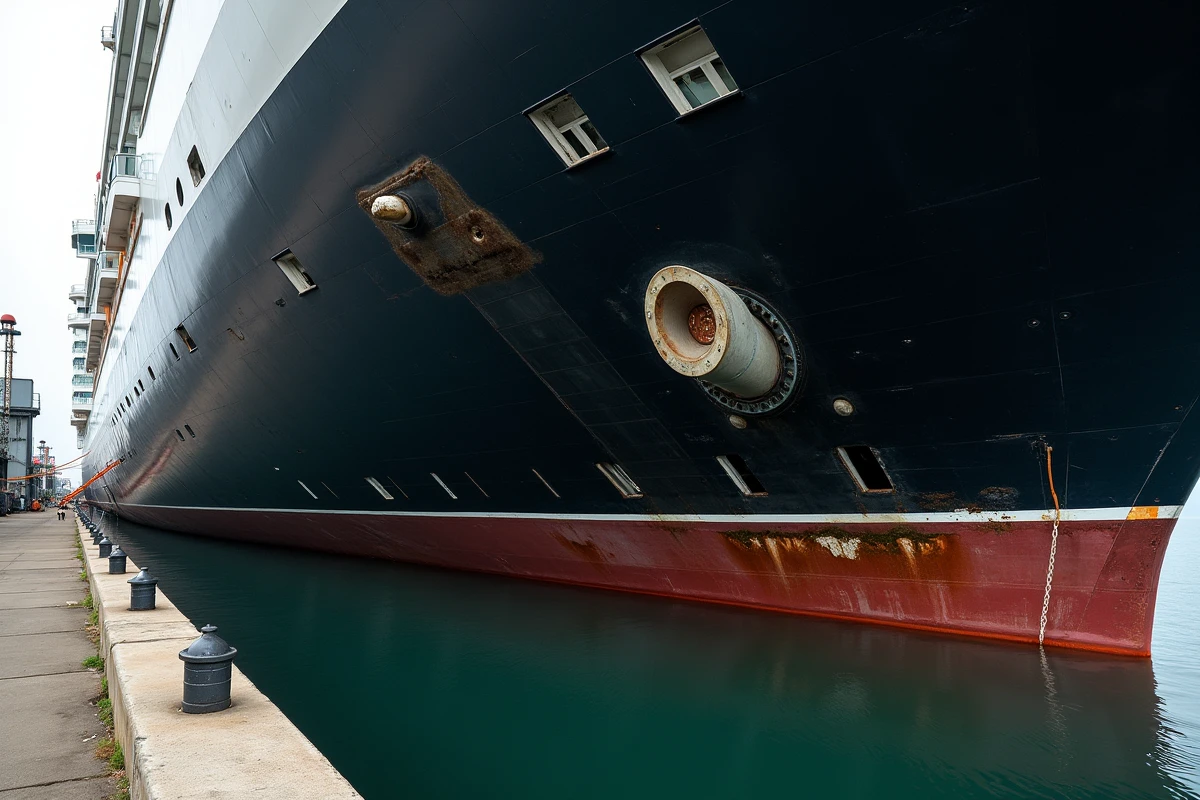
Regulations and discharge zones: where can a cruise ship discharge its wastewater?
The international MARPOL convention, adopted by the International Maritime Organization, sets the general framework. It defines specific annexes for each type of pollution: wastewater falls under Annex IV, and garbage under Annex V.
In practice, the rules vary according to the navigation area:
- In the open sea (beyond a certain distance from the coast), treated wastewater can be discharged if it meets defined quality thresholds.
- In sensitive areas like the Mediterranean or the Baltic, the restrictions become stricter. Several Mediterranean ports, notably Barcelona and Venice, now require that wastewater and sometimes even gray water be completely offloaded and treated on land when the ship is at dock.
- In immediate proximity to the coast, the discharge of untreated water is prohibited. Retention tanks then take over until the ship moves far enough away or docks in an equipped port.
This trend towards zero discharge in sensitive areas is rapidly progressing, according to data from the European Environment Agency. Ports are investing in wastewater reception infrastructures, and companies are adapting their routes accordingly.
Controls and inspections: how is compliance verified?
Cruise ships do not operate under regulatory autonomy. At each port call, port authorities can carry out inspections. The coast guard checks discharge logs, compliance certificates for treatment systems, and the condition of equipment.
Recent inspection reports, both in the United States and Northern Europe, show that checks increasingly focus on the complete traceability of waste: from its production onboard to its handover to port facilities. Companies must document each transfer, each discharge, each incineration operation.
Non-compliance can lead to significant fines or even a temporary ban on docking. This financial and reputational risk pushes operators to maintain their facilities beyond the minimum required thresholds.
The management of wastewater and waste on a cruise ship mobilizes technologies comparable to those of a small town, compressed into a limited space and subject to regular controls. Recent developments clearly point towards less discharge at sea and more treatment on land, a trajectory that is gradually transforming cruise ship stops into full-fledged environmental logistical flows.