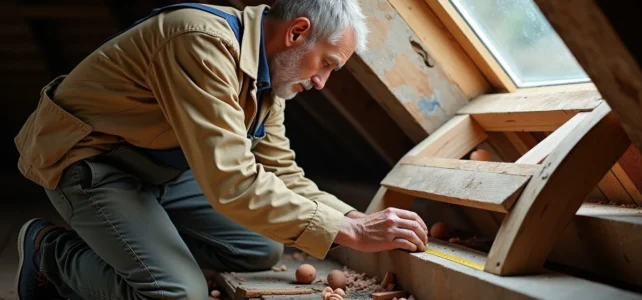
The old generation Velux roof windows have dimensional codes that no longer directly correspond to current references. A GGL 304, a GGL 606, or a GGL 1 refer to specific templates, expressed in overall width and height, whose knowledge is crucial for a successful replacement. Identifying this dimension with certainty before placing any order avoids costly adjustments to the frame or interior cladding.
Perimeter insulation and Velux dimension: what identical replacement does not resolve
The logic of identical replacement, often recommended to limit plasterwork, reaches its limits as soon as the roof has been re-insulated since the initial installation. An additional thickness of insulation around the frame reduces the available space and alters the thermal behavior of the window-to-roof connection.
Several installers report an increase in condensation and thermal bridge issues when reinstalling a Velux to the same dimensions without adjusting the sloped interior cladding or the glazing. Dimension is not limited to the size of the opening in the frame: it includes compatibility with the existing insulating complex.
Addressing dimension alongside the Ug coefficient of the glazing and perimeter insulation has now become best practice. An old frame installed in the 1980s did not incorporate these parameters, and reproducing its dimensions without questioning them amounts to retaining a thermal weak point in an otherwise efficient roof. To delve deeper into this topic, the solutions from SOS Urgence Dépannage detail the correspondences between old and new references while considering these constraints.
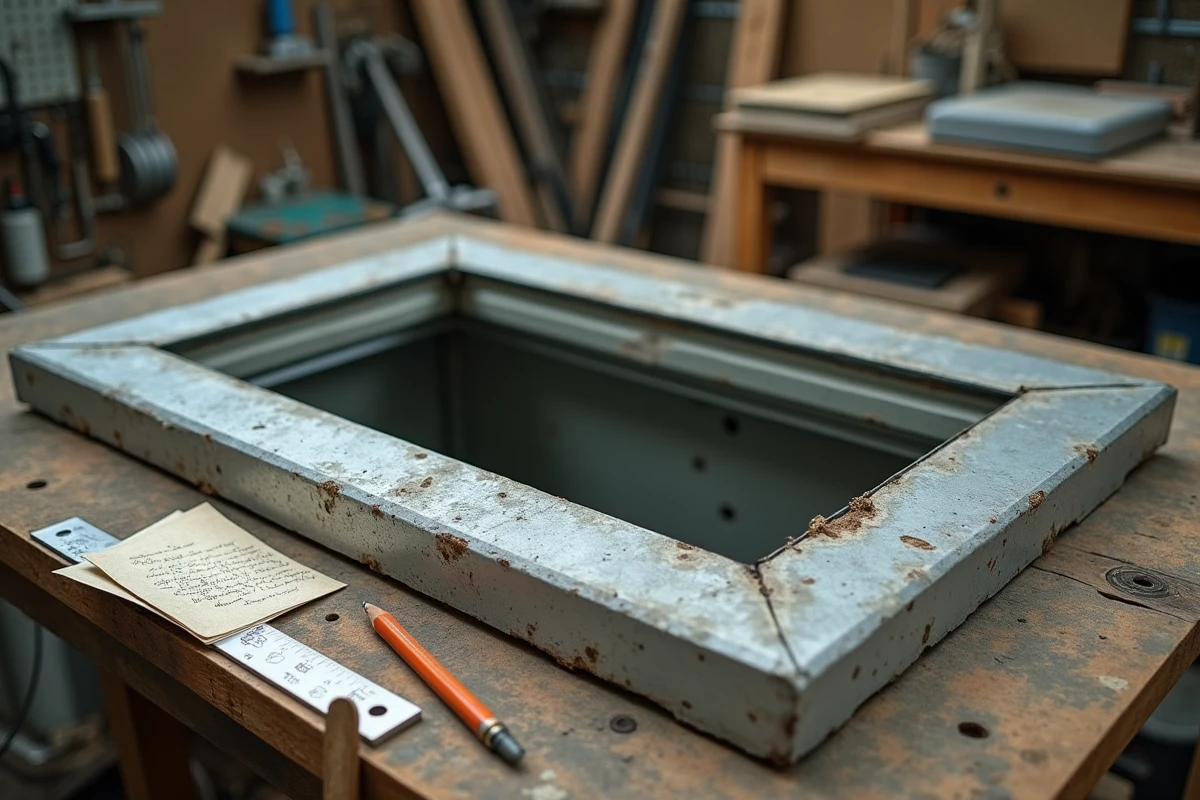
Old generation Velux dimensional code: reading and current correspondence
Before 1991, Velux used a simple numerical coding system. The number or group of numbers engraved on the nameplate (attached to the opening frame) designates a width-height combination specific to that time. After 1991, the brand switched to an alphanumeric code consisting of two letters and two digits (type MK04, MK08, SK06).
The nameplate remains the reliable starting point for identifying an old model. It is usually found at the top of the opening frame or on the right side. If the label is faded, a physical measurement of the glazing and frame allows for reference recovery by cross-referencing with the manufacturer’s correspondence tables.
Measuring an old Velux when the plate has disappeared
The measurement is taken on the outer frame, with the sash closed, by noting the overall width and height in centimeters. Three precautions reduce the risk of error:
- Measure the fixed frame (the part sealed into the structure), not the opening frame which is slightly smaller.
- Take the measurement at three different points (top, middle, bottom for width; left, center, right for height) and retain the smallest value, as old frames can deform over time.
- Compare the result with the known dimensions of the GGL, GHL, or GFL series from that time to confirm the correspondence.
A difference of a few millimeters between the measured value and the theoretical dimension is normal for a window installed for several decades. A difference greater than one centimeter indicates either a non-standard frame or a measurement error.
Width or height: which axis to prioritize in old roof renovation
On old roofs with small rafter sections, choosing a dimension that is too wide sometimes requires reinforcing or doubling the rafters, which significantly increases the budget. This structural constraint guides the choice towards a specific axis.
Some craftsmen recommend sticking to the historical widths of the old ranges and gaining comfort in height rather than width. A taller window better diffuses natural light into the room without requiring lateral frame adjustments. The gain in glazed area then occurs vertically, along the slope, where the structure is already supported.
This approach has a second advantage: it simplifies the installation of the new interior cladding. Widening requires resizing the finishing panels on both sides of the frame, while extending in height only modifies the upper or lower part, which is often more accessible.

Glazing and Ug coefficient: the forgotten parameter in dimension choice
Old Velux windows were equipped with single or double glazing with thermal performance far from current standards. During replacement, the choice of glazing is as crucial for comfort as the dimension itself.
A glazing with a low Ug coefficient reduces heat loss at the window, but this performance only makes sense if the connection between the frame and the roof insulation is properly addressed. Installing high-performance glazing in a poorly connected frame is akin to insulating a wall while leaving the window open.
Adapting the dimension to the overall thermal project
The sizing of a replacement Velux should be considered in coherence with the thermal renovation project of the roof. Several scenarios arise:
- Roof already re-insulated from the inside: check that the additional thickness of insulation does not encroach on the existing fixed frame before ordering the same reference.
- Re-insulation planned at the same time as the Velux replacement: size the frame while incorporating the final thickness of insulation, even if it means slightly adjusting the dimension compared to the old frame.
- Non-insulated roof with no short-term insulation project: identical replacement remains relevant, but planning for cladding compatible with future insulation avoids having to remove everything later.
Treating dimension, glazing, and insulation as a whole rather than as three separate decisions reduces rework and additional costs. Old guides separated these parameters because attic insulation was not systematic. Current thermal regulations render this approach obsolete.
The choice of an old generation Velux dimension is therefore not limited to finding a code on a plate and ordering the modern equivalent. The rafter section, the thickness of existing insulation, and the target glazing coefficient form three interrelated variables. Ignoring them risks either a persistent thermal bridge or unexpected structural work.