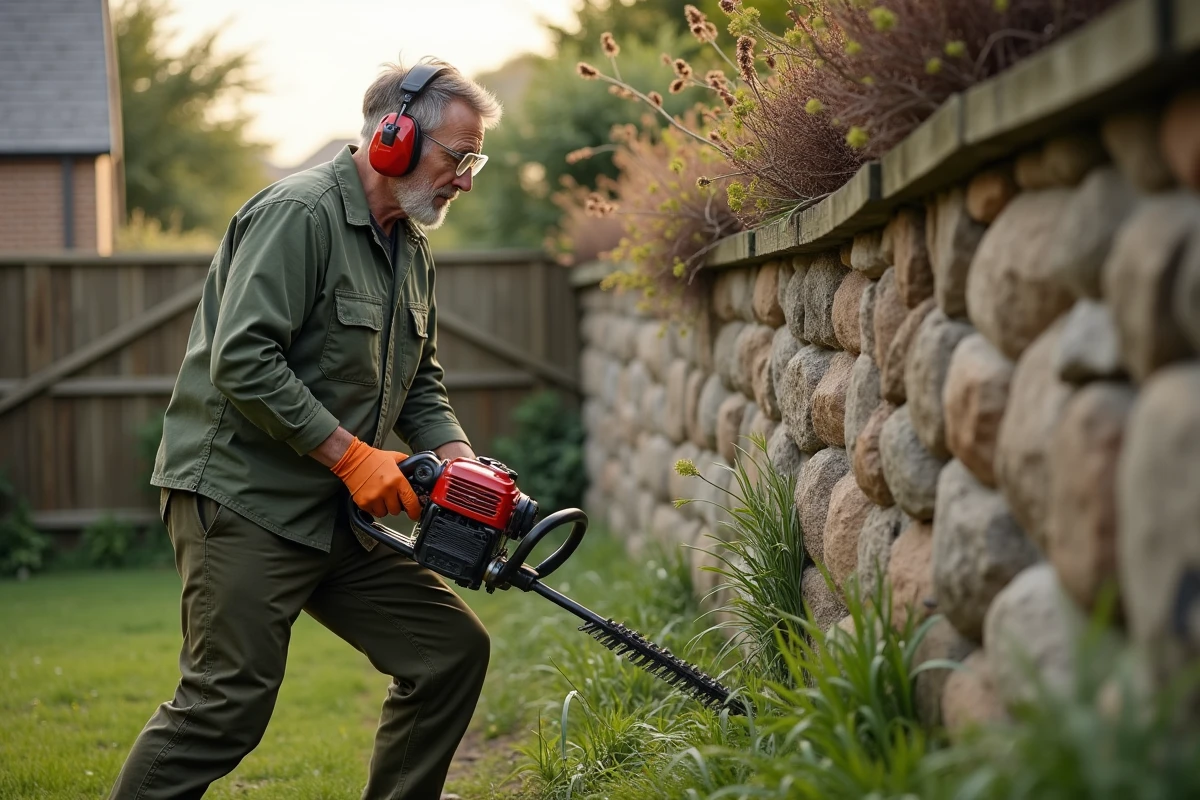
A thicket of brambles behind the house, tall grass creeping up to the fences, a sloped area where the mower simply can’t go: it’s often this kind of situation that drives one to equip themselves with a brush cutter. However, it’s essential to choose the right machine, because between a lightweight trimmer and a backpack brush cutter, we’re talking about different jobs and budgets.
Dense vegetation and uneven terrain: the real starting point for choice
Before looking at the technical specifications, we start by observing what we have under our feet. A flat, modestly sized garden that is regularly maintained does not require the same machine as an overgrown area with brambles that have been established for several seasons.
On uneven or sloped terrain, maneuverability is just as important as power. A machine that is too heavy tires quickly and becomes dangerous on slopes. Conversely, a small electric trimmer won’t hold up against woody underbrush.
The type of vegetation dictates the cutting system: a nylon line is sufficient for soft grasses and finishing touches along paths, but as soon as we tackle brambles, shrub suckers, or tough grasses, we need to switch to a metal blade or disc. You can find models equipped for these different scenarios on debroussailleuse-warrior.com.
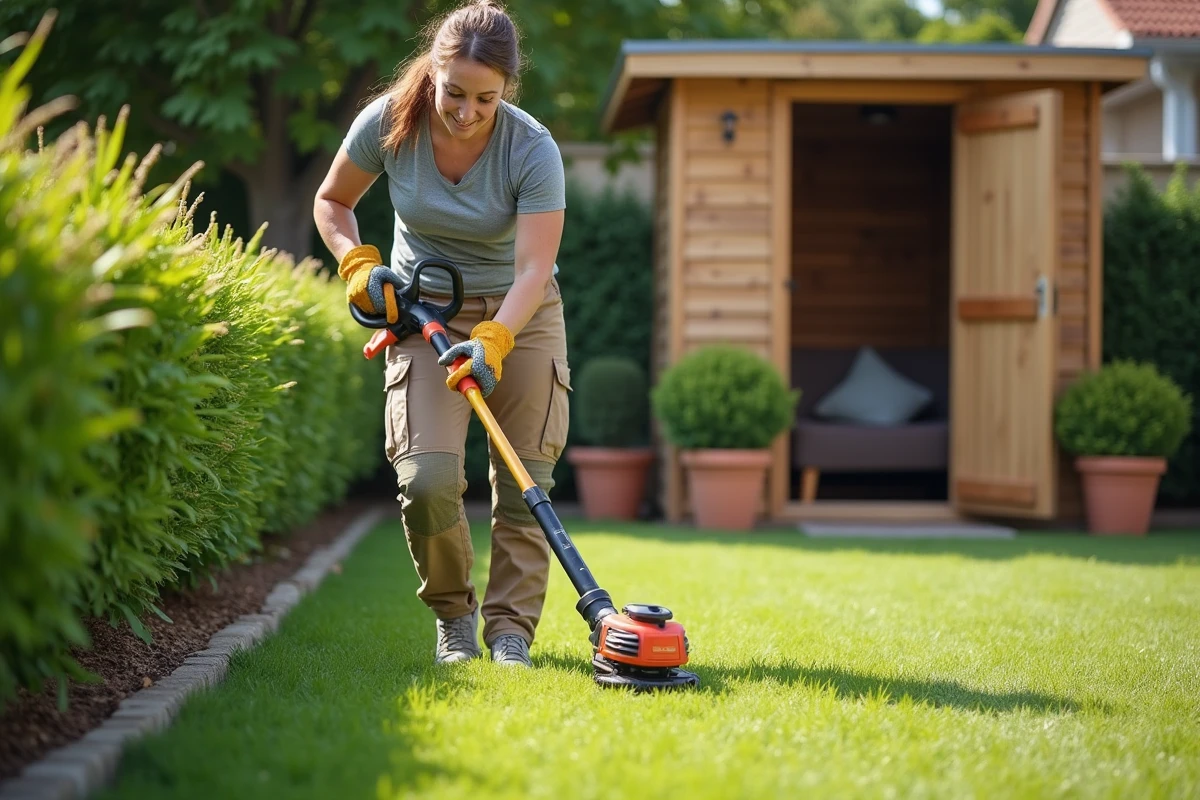
Gas or battery brush cutter: decide based on actual use
The question comes up consistently, and the answer depends less on technology than on the duration and frequency of work sessions.
Battery: the logical choice for regular maintenance
Battery models in 36 or 40 V have made significant progress in recent years. Husqvarna, Stihl, and Makita now offer battery brush cutters known as “semi-professional,” with autonomy deemed sufficient for regular maintenance of gardens and small parks.
The reduced noise is a decisive advantage in residential areas. Several municipalities now impose time restrictions on the use of noisy gas machines through municipal orders. With a battery, you can work early in the morning or late in the day without risking a neighborhood conflict.
Feedback varies on actual autonomy in difficult conditions (thick brambles, wet terrain), but for a garden maintained every two to three weeks, the battery easily lasts the session.
Gas: when the terrain demands it
For a large overgrown area, a wooded area to clear, or long and infrequent interventions, a gas engine remains relevant. Its sustained power does not depend on a charge, and you can work without time limits.
On the downside, two-stroke engines are subject to European Stage V standards on pollutant emissions. Manufacturers are adapting their engines, but the oil-gas mixture, carburetor maintenance, and noise remain real constraints. A gas engine is justified when the battery does not meet the need, not out of habit.
Engine power and cutting system: the two criteria to consider together
We often see guides that list power on one side and cutting system on the other. In practice, the two work together.
- A nylon line on a low-powered machine is suitable for fine grasses, lawn edges, and finishing around flower beds. This is the domain of the classic trimmer.
- A thick nylon line on a more powerful engine allows for mowing tall grasses and dense grasses, provided you don’t encounter woody plants.
- A three-tooth blade or a shredding disc, mounted on a sufficiently powerful brush cutter, can tackle brambles, suckers, and semi-woody vegetation.
- A brush blade or a saw blade is intended for heavy work: clearing, thinning underbrush, cutting small shrubs.
Adapting the cutting system to the vegetation avoids premature wear of the machine and the consumable. You don’t force a standard nylon line on brambles, and you don’t bring out a brush blade to refresh a lawn edge.
Ergonomics and harness: what changes after an hour of work
On paper, all brush cutters look alike. After an hour of work on sloped terrain, the differences become very clear.
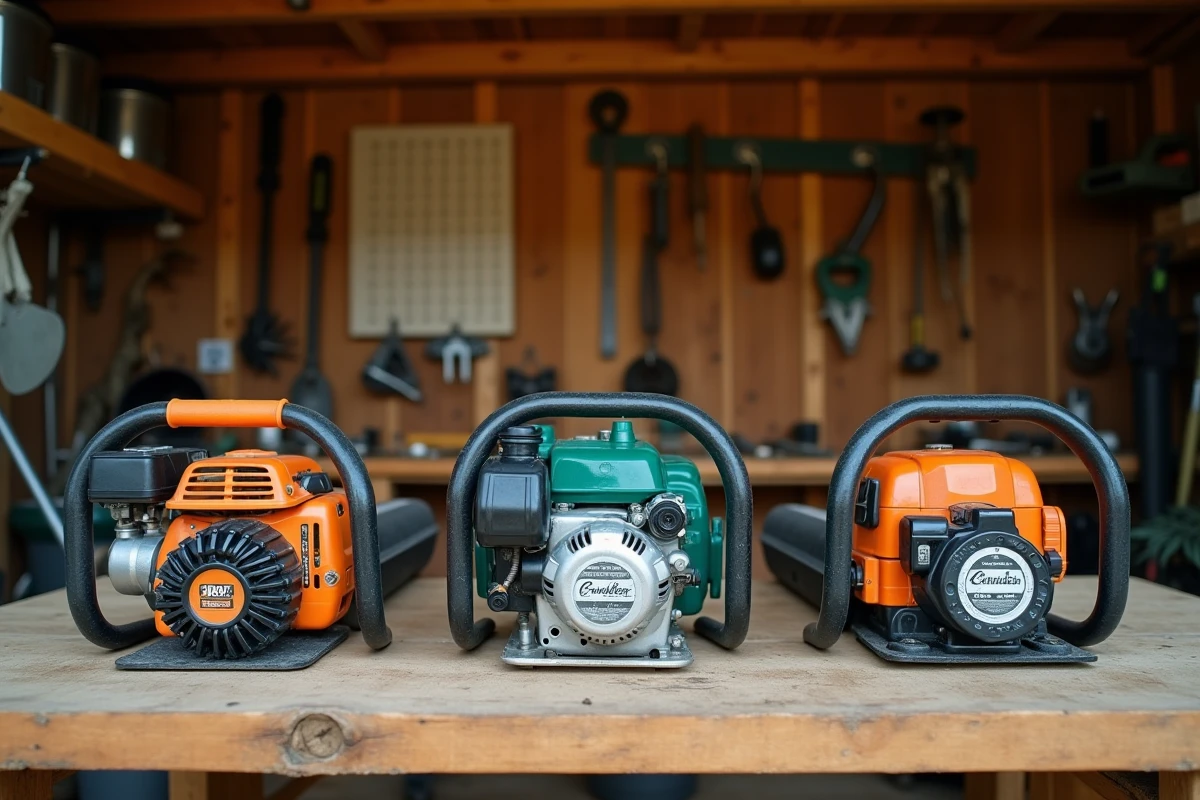
The weight of the machine affects fatigue. A lightweight portable brush cutter (like an enhanced trimmer) is easy to handle but lacks power for heavy work. Heavier models require a suitable harness to distribute the load across the shoulders and hips.
A double-strap harness with a suspension hook transforms the comfort of use. Backpack models go even further by relocating the engine to the back, freeing the arms and facilitating work on slopes or in cluttered areas.
Another often overlooked point: the handle. A loop handle offers maneuverability for finishing touches and narrow areas. A bicycle-type handlebar stabilizes the machine better on wide areas to be mowed. The choice directly depends on the terrain.
Safety and maintenance of the brush cutter: two underestimated angles
Stone, wood chip, or nylon line projections pose the main risk. Safety glasses, thick pants, and closed shoes are not optional, even for ten minutes of work.
In terms of maintenance, a battery machine requires little: cleaning the casing, checking the line or blade, storing the battery in a frost-free environment during winter. A gas machine additionally requires cleaning the air filter, changing the oil, checking the spark plug, and purging the carburetor at the end of the season.
- Check the condition of the protective casing before each use (cracks, fastening).
- Replace the nylon line as soon as it is too short to cut effectively, to avoid unnecessarily straining the engine.
- Sharpen or change metal blades at the first signs of wear (irregular cutting, abnormal vibrations).
Regular maintenance extends the lifespan of the machine by several seasons. It also enhances safety, because a dull blade or a line that is too short forces you to exert more effort, increasing the risk of losing control.
The right choice of brush cutter ultimately relies on three concrete elements: the vegetation to be cut, the terrain configuration, and the frequency of use. Once these parameters are established, the rest (engine type, cutting system, harness) follows naturally. It’s better to have a well-sized machine than an overpowered model that will end up being too heavy after twenty minutes.