
A chainsaw should not be chosen based on the displayed power alone. The torque at the chain, the tooth profile, and compatibility with your local regulatory constraints weigh more than the watts or cubic centimeters advertised on the label. Here, we detail the technical points that make the difference between a relevant purchase and an underutilized machine.
Chain tension and tooth profile: the real cutting criteria
The majority of guides focus on the motorization. However, the weak link of a poorly chosen chainsaw lies in the chain and its suitability for the guide.
Three tooth profiles coexist in the market. The round tooth (known as “semi-chisel”) forgives sharpening mistakes and retains its sharpness longer in dirty or sandy wood. The square tooth (“full chisel”) cuts faster in clean wood but dulls at the first contact with dirt. The semi-square tooth, a hybrid, offers a compromise suitable for mixed work (pruning followed by cutting on the ground).
The chain pitch determines the aggressiveness of the cut. A standard 3/8″ pitch is suitable for most forestry work. The .325″ pitch, finer, reduces vibrations and is suitable for short guides used in pruning. We recommend checking the compatibility between the drive sprocket, chain pitch, and guide before any purchase, as a misalignment of a few tenths of a millimeter can cause premature wear of the entire assembly.
Detailed technical sheets on these compatibilities are available on tronconneuse.xyz, which avoids relying solely on sometimes imprecise manufacturer recommendations.
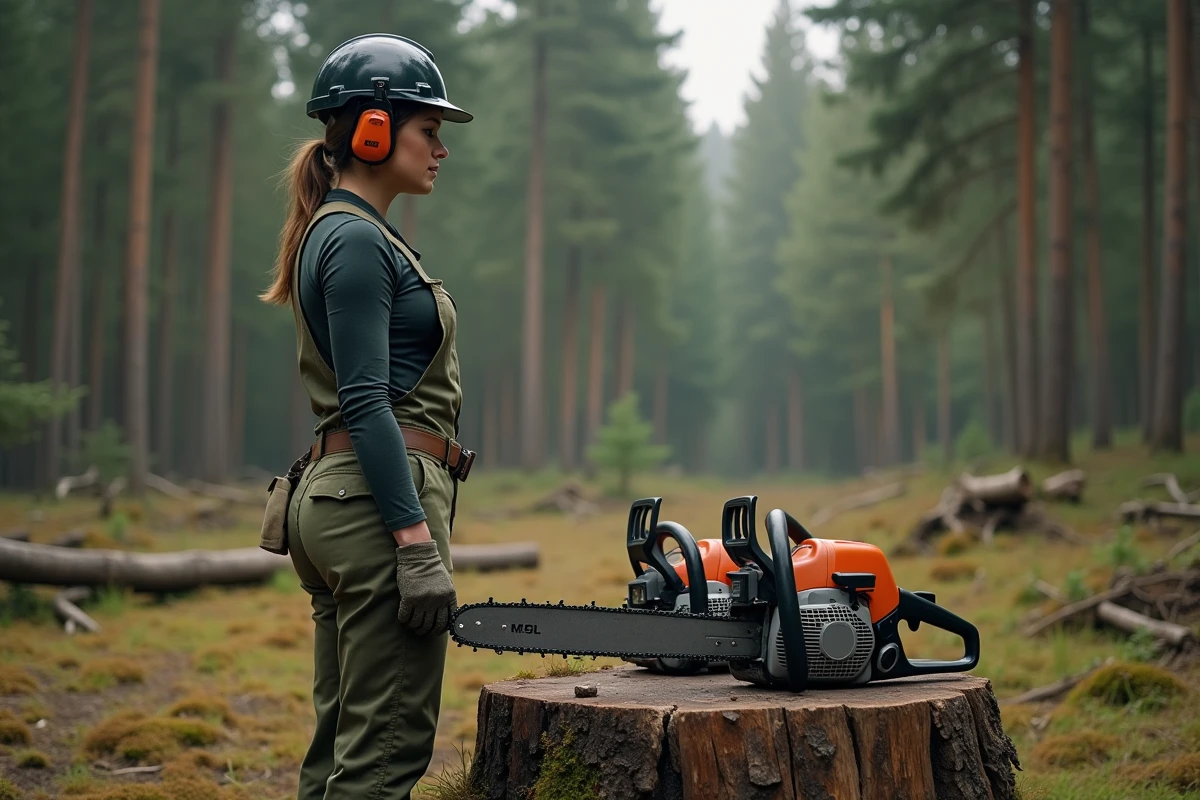
High voltage battery chainsaw: the end of the thermal reflex
The battery/thermal opposition is no longer valid. According to a comparative test published by UFC-Que Choisir (updated January 2025), 60-80 V battery models compete with thermal ones for felling medium trunks. The instantaneous torque of the brushless motor eliminates the ramp-up time, improving cutting responsiveness in the first few seconds.
Battery life remains the deciding factor. With a high-capacity battery, expect a sufficient working duration to cut several steres before needing to recharge. A set of two batteries with a fast charger covers a day’s intermittent work without difficulty.
Local restrictions on thermal engines
The Association of Mayors of France (AMF) notes a multiplication of municipal decrees restricting the use of thermal garden engines since 2023, particularly in Île-de-France and Auvergne-Rhône-Alpes. These decrees limit the authorized time slots and even occasionally prohibit thermal machines in dense suburban areas.
Checking local regulations before investing in a thermal model prevents ending up with an unusable machine for half the weekend. For micro-enterprises providing garden maintenance in residential areas, battery becomes a strategic as well as technical choice.
Guide-chain ratio and engine displacement: sizing without oversizing
A guide that is too long for the motorization slows down the chain speed and forces the user to push, which accelerates wear and increases the risk of kickback. Conversely, a short guide on a powerful motor wastes torque without productivity gains.
We observe a simple principle in practice:
- Pruning and small branch cuts (diameter less than the length of the arm): guide of 25 to 35 cm, modest motorization, chain with reduced pitch .325″ or 3/8″ LP
- Firewood cutting, medium diameter trunks: guide of 40 to 45 cm, intermediate motorization, standard 3/8″ chain
- Felling of large diameter conifers or hardwoods: guide of 50 cm and more, high displacement or high voltage battery, square tooth for cutting speed
Every additional centimeter of guide requires a measurable increase in power. Stihl and Husqvarna catalogs indicate compatible guide ranges by model: staying within the lower third of this range often provides the best cutting efficiency.
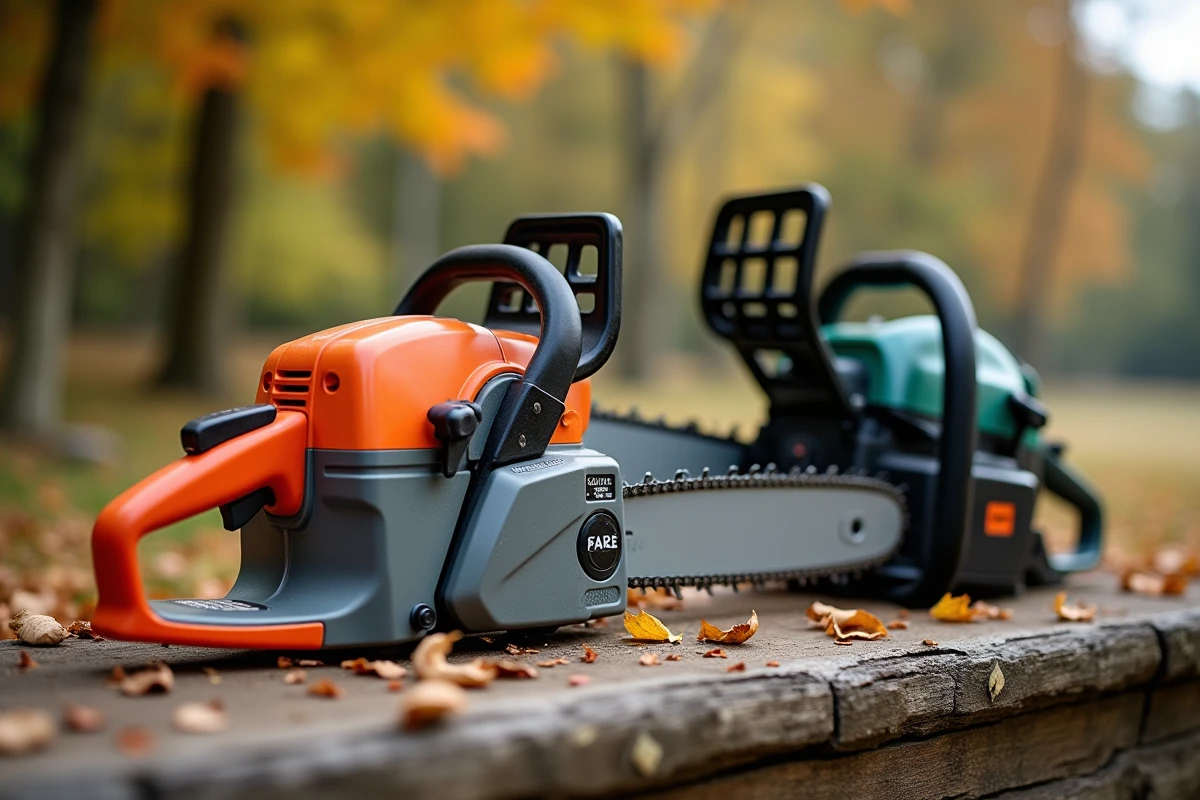
Chain and guide maintenance: what determines longevity
A poorly sharpened chain consumes more energy (electric or thermal), produces fine sawdust instead of chips, and excessively strains the motor. Sharpening can be checked by observing the shape of the chips: powdery filaments indicate a dull tooth.
Sharpening with a round file remains the reference method. The diameter of the file depends on the chain pitch. An inexpensive angle template ensures a constant tooth angle along the entire length of the chain. Electric bench sharpeners provide a consistent result but remove more material with each pass, reducing the number of possible sharpenings before replacement.
Flipping and replacing the guide
The guide wears asymmetrically. Flipping the guide with each chain change equalizes the wear of the rails and extends its lifespan. A grooved or pinched rail causes the chain to drift, leading to imprecise cuts and increased muscle fatigue.
Cleaning the guide groove with a fine tool and checking that the lubrication hole is not blocked are part of routine maintenance, at each refueling or battery recharge.
- Check chain tension when cold before each session (one link should lift a few millimeters without leaving the guide)
- Check the chain oil level: insufficient lubrication causes rapid overheating of the guide and chain
- Inspect the drive sprocket every two chain replacements, as a worn sprocket deteriorates any new chain within hours
The European Commission published a 2023 evaluation report indicating a trend towards stricter emission standards for small thermal engines, including chainsaws. Anticipating this evolution logically directs towards battery models or next-generation thermals that comply with the strictest thresholds. Choosing a chainsaw today without considering this regulatory context risks a shortened investment lifespan.